What happens when you're responsible for making sure Sunday morning goes smoothly across five locations? What about 45?
How do you give meaningful feedback to a campus pastor in Tulsa when you're sitting in Oklahoma City? What does "excellence" even look like when you're launching a portable church campus in a rented gymnasium?
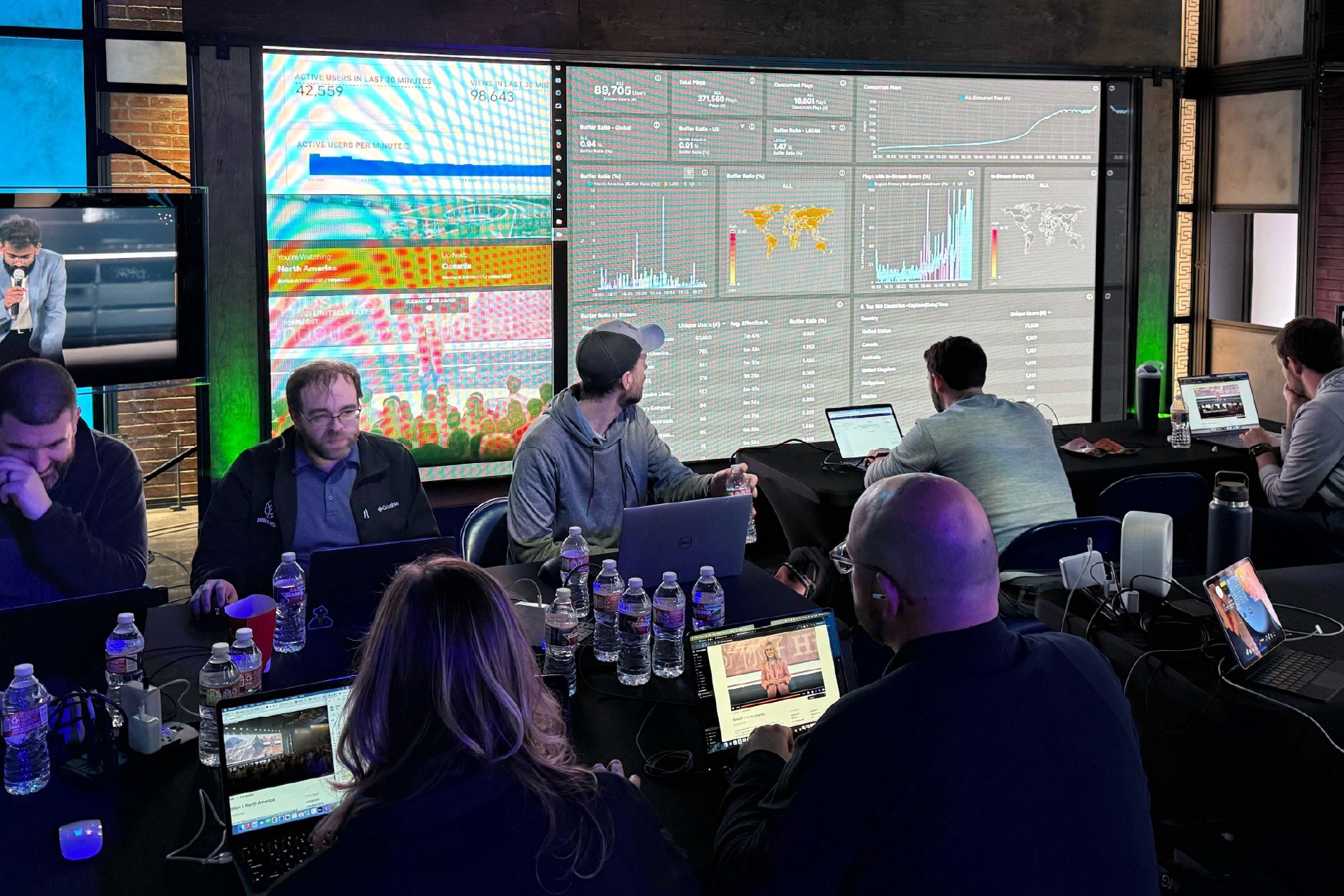
These were some of the questions asked at a recent Church IT Roundtable panel featuring David Ross, Director of IT Support at Life.Church, and Zach Zollo, Director of IT from Elevation Church. Both organizations rely on Sardius Pulse for their multi-campus monitoring needs. The conversation offered a rare window into multisite church strategy and how two of the largest churches in America think about technology, feedback, and the delicate balance between central standards and local autonomy.
Here are some of the takeaways that Ross and Zollo offered from their experiences.
The Real Value of Seeing What Happened in a Service
Both Life.Church and Elevation Church have invested in Sardius Pulse to automatically record services across all their locations. While this has had clear benefits on a practical level, the "why" behind the investment goes far deeper than compliance or the archival.
At Life.Church, the surprising value behind Pulse has been speed. The feedback loop starts immediately. Campus pastors review their own stage time. Central ministry teams watch how videos landed with different congregations. The creative media team analyzes which content resonated and which fell flat.
Even better? Everything happens without requiring anyone to fill out a report.
"Otherwise, all of our ministry teams would have to be in the auditorium to give feedback," Ross explained. "Since we're able to record it, they're freed up to go focus on their ministries, leading their host team, their kids' ministry, instead of having to watch stage time live."
Elevation Church takes a similar approach. Their teams meet on Mondays and Tuesdays to review footage, critique talking points, and even evaluate things like lighting. Again, the keyword that kept coming up was speed.
"Slow feedback is just not super helpful," Zollo noted. "The faster the feedback, the better it is."
Speed isn’t just a perk. It leads to more effective ministry time. It also adds value by helping teams catch things “in the moment” rather than risking them falling between the cracks after the fact.
Real-Time Viewing Autonomy Within Guardrails
One of the more nuanced dynamics in multi-site ministry is the tension between consistency and local expression. Both Elevation Church and Life.Church have moved away from rigid, top-down programming.
Elevation Church operates by allowing creative liberties within defined standards. Life.Church used to prescribe exact worship sets for every campus. Now, they trust local worship pastors to choose songs that resonate with their specific congregation.
"No one knows their congregation better than that campus team," Ross said. "Central could say 'this is your worship set,' but what's going to reach that congregation in that city might be very different."
Sardius Pulse offers a way to have an accountability mechanism without hampering individual campus autonomy. Rather than dictate single decisions made from a primary campus, central worship teams can review how sets were constructed, how spoken moments landed, and whether the flow served the message, all without micromanaging in the moment.
When that happens, the technology becomes the bridge. Campuses get freedom, central teams get visibility, and nobody has to be in multiple places at once.
Beyond Sunday Morning
The use cases extend well beyond weekend services. Both Life.Church and Elevation Church leverage Pulse for multiple weekday activities, including:
Worship Auditions
Instead of trying to evaluate a vocalist while simultaneously playing alongside them, teams can review the recording later with fresh ears. "Being able to go afterwards and play it back and really listen..." Ross explained. “It's a little bit easier when you're not focused on also being part of whatever audition is taking place.”
Training and Communication Practice
Life.Church runs Thursday communication drills where staff practice their stage time in front of the entire campus team. The Monday review then captures how it actually went live.
Safety and Security Documentation
If something happens during an event, having video evidence isn't just helpful, it's essential. Pulse provides the necessary documentation to track everything going on.
Remote Leadership
Campus pastors who are out of town or sick on a Sunday can still pull up Pulse to see how things went. Executive leadership teams can also review footage on Monday mornings from anywhere to stay connected to what's happening across all locations.
Real-Time Visibility Empowering Campus Autonomy
Visibility and autonomy don’t have to be at odds with each other. Tools like Pulse give church leaders insights into individual campus activity without the need to micromanage.
And yet, often, using technology to maintain oversight and accountability are seen as a heavy hand. That’s why, in the second half of this mini series, we’re going to look at the “Big Brother” tech question and see if the Life.Church and Elevation Church reinforced or contradicted the concept.
Sardius Pulse provides automated multi-campus recording, centralized review, and cloud-based reliability for multi-site churches of every size. Whether you're managing a single multisite location or a network of them, Pulse gives your teams the visibility needed without adding to their workload.
Learn more about how Pulse can serve your organization.